- Welcome Guest
- Sign In
- Welcome Guest
- Sign In
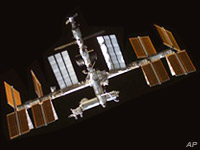
A humanoid robot named "Kirobo" has had a chat with a Japanese astronaut on the ISS. The robot, also from Japan, is designed to process questions and construct answers from its vocabulary bank, as opposed to regurgitating preprogrammed responses. Asked if he could handle zero-gravity conditions, the...

A task force set up by President Obama to review the National Security Agency's surveillance activities has suggested a list of what it calls "significant" reforms, including restrictions on spying. Among the recommendations: changes in surveillance of both U.S. and non-U.S. citizens to protect thei...

A Chinese citizen was sentenced to three years in U.S. prison for trying to smuggle American-made microchips to China. The man, Philip Chaohui He, was targeted in a 2011 sting at a Los Angeles-area port. He was nabbed while approaching a Chinese freighter, toting with him 200 radiation-hardened micr...

Google on Tuesday released XE 12, the latest update to its Google Glass product. One of its new features lets users take a photo with a wink. "If I were Google, I'd keep quiet about ... how quickly people can take photos of unsuspecting targets," said Joshua Flood, an analyst at ABI Research. Privac...
A federal judge has ruled that the NSA's collection of telephone metadata is likely a violation of the Fourth Amendment to the U.S. Constitution, adding another point of debate to this volatile issue. U.S. District Judge Richard Leon's ruling has extra impact because he is a conservative appointed b...

Finding itself at the center of a social media firestorm, Twitter on Friday acted quickly to placate users who were concerned about changes it made to its blocking functionality Thursday afternoon. Prior to the change, Twitter would send a notification to a person blocked from another's profile. The...

Instagram has dipped its toes into private-photo and video messaging waters. Instagram Direct allows the community's more than 150 million monthly active users to send photos and videos within a group. The process of sending a private message works just like posting a photo or video publicly: Take a...

The Australian state of Victoria has made it illegal to distribute explicit images without consent. The new law specifically outlaws "non-consensual sexting," which generally takes place when lovers split and there is post-breakup payback in the form of intimate photos of the former partners. The la...
The United States National Security Agency reportedly is using at least one type of Google cookie -- PREF, which stores a user's preferences -- to home in on the PCs of targets it wants to hack. NSA's Special Source Operations division, which works with private companies to slurp data from the Inter...

Scientists in China will use the country's Tianhe-1A supercomputer to forecast and analyze smog in major cities. The Tianhe-1A will be used to create a simulation that will collate data from across more than 100 Chinese cities. Theoretically, this will enable scientists to predict the density of smo...

Eight major U.S. high-tech companies have called on governments worldwide to reform surveillance practices. Google, Microsoft, Twitter, Yahoo, Facebook, LinkedIn, Apple and AOL want governments to ensure that data collection by law enforcement and intelligence agencies is bound by rules and focuses ...
The U.S. National Security Agency and British counterpart GCHQ have monitored the activities of online gamers, according to documents published Monday that were leaked by whistleblower Edward Snowden. The two agencies gained access to the online Xbox Live console network, the documents suggest, as w...
Ecuador hosted an Internet freedom forum last week, welcoming guests from the pro-transparency community. The nation's president, Rafael Correa, is also funding a new research project designed to overhaul traditional copyright laws. To that end, the FLOK Society, based at a public university in Quit...
Every day, the United States National Security Agency collects nearly 5 billion cellphone location records worldwide, The Washington Post reported. The information, obtained from documents released by NSA whistleblower Edward Snowden, indicate the records are stored in the agency's FASCIA database.

India's home ministry reportedly will seek advice from the U.S. to help decrypt communications taking place on platforms like Skype, BlackBerry and WeChat. Sharing such spying techniques is a potential "area of cooperation," according to Indian law enforcement. India has already launched an elaborat...
 Loading ...