- Welcome Guest
- Sign In
- Welcome Guest
- Sign In

AI data center demand is tightening memory chip supplies, forcing manufacturers to prioritize AI hardware over consumer devices and raising concerns about higher prices and future shortages.

As AI infrastructure expands, modular data centers may offer a path to lower resource consumption and greater community acceptance.

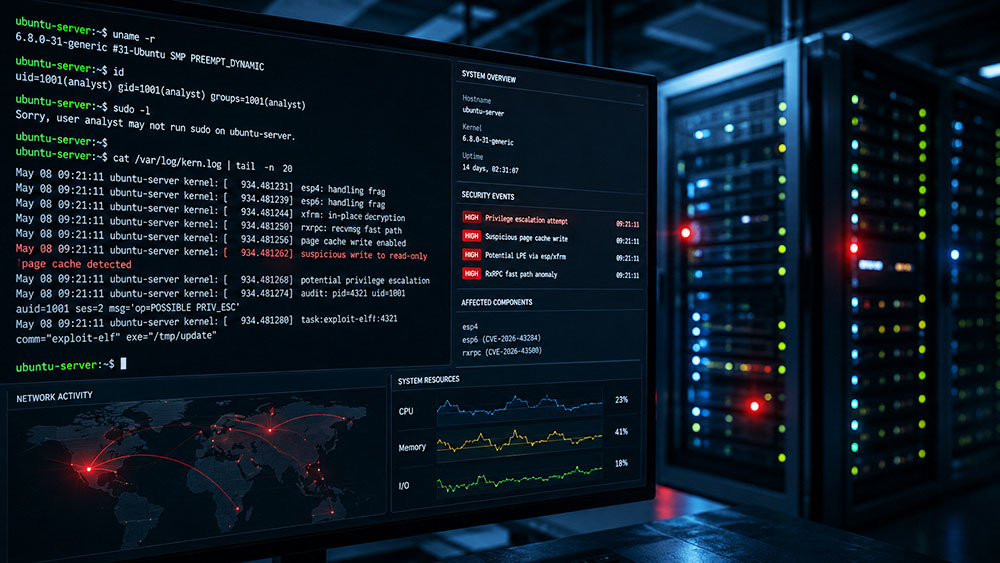
A newly disclosed Linux privilege escalation flaw dubbed "Dirty Frag" is raising concerns among security researchers who warn it could give attackers reliable root access across a wide range of enterprise environments.
As AI demand accelerates, infrastructure limits are emerging as the real bottleneck. Power, cooling, and supply chains now shape deployment timelines and ROI.

Enterprise AI demand is rising, but most GPU capacity remains idle, exposing costly overbuying and inefficiencies.

Hyperscale data center development is shifting inland as AI demand surges, with Texas and Midwestern states gaining ground due to power availability, lower costs, and faster permitting.

AMD’s 2025 performance points to a shift from chips to platforms. CES 2026 reinforced execution, but this year's deployments will determine whether that strategy holds.
Nemotron 3 shows how Nvidia is using open models, tooling, and data to turn raw compute into deployable intelligence and reinforce its full-stack AI strategy.

AMD’s $9.2B quarter shows how disciplined leadership—not hype—is letting the company pressure Intel and exploit Nvidia’s power gaps as it reshapes enterprise AI strategy.

Infineon’s OktoberTech event offered a look at its evolving AI strategy, spanning robotics, edge devices, megawatt-scale data centers, and quantum development as it deepens its role in next-generation compute.

AMD’s 2025 Financial Analyst Day marked a shift from chasing Nvidia to leading on openness and scale, positioning the company as a long-term platform power in data center and AI computing.

Most generative AI projects fail to show measurable ROI despite billions in investment. Experts point to weak data infrastructure as the underlying cause preventing enterprise AI from reaching profitable scale.
Hewlett Packard Enterprise used its 2025 analyst meeting to argue it is entering a new phase of profitable growth, driven by AI infrastructure, networking, and the Juniper integration.

AMD’s sweeping partnership with OpenAI goes beyond GPU supply. With a six-gigawatt buildout and the Helios rack-scale platform, AMD is redefining power, scale, and trust in the next era of AI data center infrastructure.