- Welcome Guest
- Sign In
- Welcome Guest
- Sign In

TuxCare CEO Igor Seletskiy explains why vulnerability backlogs, remediation speed, and contextual risk should complement traditional CVE severity ratings.

Google DeepMind CEO Demis Hassabis is calling for a new standards body to oversee frontier AI as experts debate whether existing testing institutions should be strengthened instead.

As autonomous weapons become increasingly practical, banning them may prove impossible. Building stronger AI defenses could offer a more realistic path to protecting civilians and maintaining military deterrence.

A new automatic license plate reader upgrade links nearby electronic devices to vehicles, raising privacy, Fourth Amendment, and cybersecurity concerns.

As GenAI becomes part of everyday life, online safety depends on AI literacy as much as traditional security habits. New research examines why older adults may be especially vulnerable to persuasive AI-generated deception.

Anthropic's clash with regulators over AI export controls raises broader questions about cybersecurity, sovereign AI, and the future of government oversight.

AI can identify threats and speed security analysis, but risk scoring alone cannot determine what software should be allowed to run. Effective prevention requires explainable, policy-driven controls.

Unauthorized device access has overtaken scams as a leading identity theft threat, exposing consumers to account takeovers, credential abuse, and interconnected fraud schemes.

Apple's WWDC26 focused less on AI spectacle and more on making intelligence a seamless part of everyday experiences across the Apple ecosystem.

Apple used WWDC26 to showcase deeper AI integration across its ecosystem, enhanced Siri capabilities, and new tools aimed at improving child safety.

Major telecom providers are launching a cybersecurity alliance to improve real-time threat sharing and strengthen defenses against escalating attacks on communications infrastructure.

AI-generated legal hallucinations are increasingly leading to sanctions, delayed cases, and governance concerns as courts and law firms struggle to control unauthorized AI use and fabricated legal reasoning.

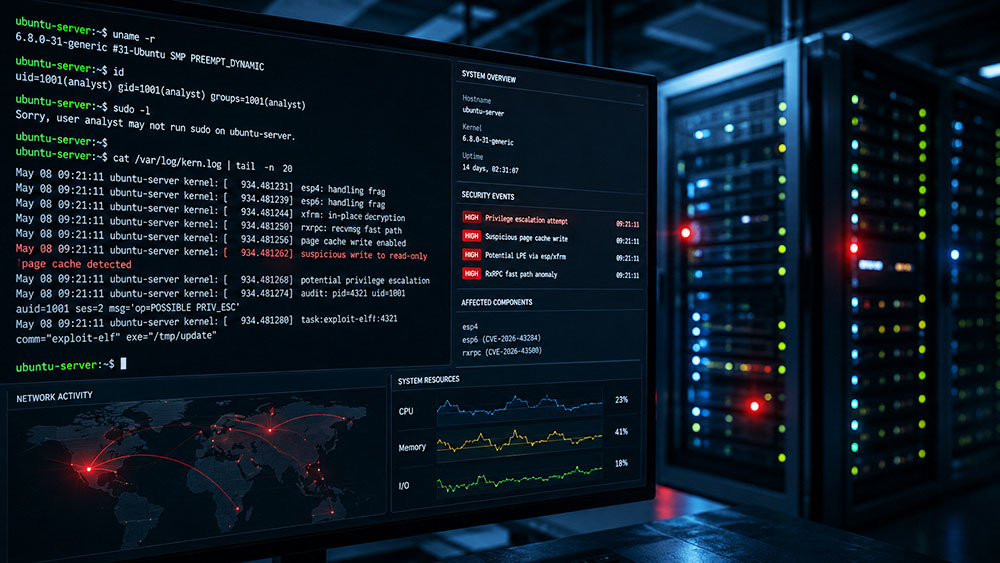
A newly disclosed Linux privilege escalation flaw dubbed "Dirty Frag" is raising concerns among security researchers who warn it could give attackers reliable root access across a wide range of enterprise environments.

A recently patched GitHub RCE flaw is raising broader questions about implicit trust in software supply chains. CodeHunter CEO Ken Ammon explains why trusted users and platforms no longer guarantee safe code.