- Welcome Guest
- Sign In
- Welcome Guest
- Sign In
News that a Russian gang has stockpiled more than a billion purloined user name and password combinations has revved up the Internet's reputation as a post industrial Wild, Wild West. Just how much havoc will be raised by the gang remains to be seen. The data thieves so far appear content to use the...

USIS, the contractor that did the background checks on Washington Navy Yard shooter Aaron Alexis and NSA leaker Edward Snowden, on Thursday reported that its computer systems have been breached. "Our internal IT security team recently identified an apparent external cyberattack on USIS' corporate ne...

A Russian cybercriminal gang so far has stolen 4.5 billion credentials, of which 1.2 billion appear to be unique, Hold Security has announced. The credentials belong to more than 500 million email addresses. Two reports released Tuesday may help explain why the cybergang was so successful. About 92 ...

Can a hacker take over a passenger jet by sneaking in through its WiFi or in-flight entertainment system? The possibility of that occurring, as suggested by cybersecurity firm IOActive, has security experts hot under the collar. Ruben Santamarta, principal security consultant at IOActive, led a team...

The U.S. Department of Homeland Security last week sounded an alarm warning retailers of a family of malicious programs aimed at compromising point-of-sale systems. Attackers used such software last year in massive data breaches that nicked millions of consumer records at Target and Nieman Marcus. V...

News that two Carnegie-Mellon CERT researchers have developed an inexpensive way to breach the Tor network has the project, privacy advocates, and probably criminals who use the network equally concerned. The Tor Project posted has advised relays to upgrade to Tor 0.2.r.23e or 0.2.5.6-alpha to close...
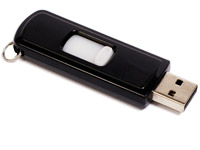
USB flash drives could be at risk of a pernicious attack on their firmware. Over the past two decades, USB devices, aka "thumb drives," have proliferated all over the world, because USB has proven to be a versatile standard. That versatility, though, also makes USB devices vulnerable to what could b...
Old tricks that have helped hackers penetrate computers for months or longer worked again last week at Goodwill and Stubhub. Taking a page from the gang that pillaged payment card and personal information from Target last year, hackers clipped payment card information from an undisclosed number of G...

An Android vulnerability that exists in every version from v2.1 Eclair to v. 4.3 Jelly Bean could expose millions of users, Bluebox Security has warned. The flaw lets attackers fake the certificates of specially privileged parties, such as Adobe and Google Wallet, and serve them up with malware that...

The long-held belief that Android is the least secure of mobile OSes was shattered by security researcher and expert iOS hacker Jonathan Zdziarski over the weekend. He unveiled a host of iOS vulnerabilities, the scope of which was staggering: undocumented services that bypass backup encryption and c...

Google on Tuesday announced Project Zero, an effort to speed up the security bug-fixing process. A team of cybersecurity experts will go after vulnerabilities in any and all software, notify the vendors, and then file bug reports in a public database. The Project Zero team has promised to send bug r...

It's a given that hackers can and do penetrate websites with laughable ease, ranging from those of retailers to those of the United States government. It certainly doesn't help the security-minded to know that the U.S. National Security Agency and other countries' spy agencies, including the UK's GC...
Companies providing the world's critical infrastructure are woefully unprepared for cyberattacks despite the increasing threat level, evidenced by the release of the Stuxnet worm and the Shamoon virus in recent years, a survey conducted jointly by the Ponemon Institute and Unisys has found. Nearly 7...
Nearly one-third of the world's computers could be infected with malware, suggests a report released last week by the Anti-Phishing Working Group. Malicious apps invaded 32.77 percent of the world's computers, a more than 4 percent jump from the previous quarter's 28.39 percent, the report estimates...

The energy industry in the United States and Europe is being targeted by a cybercriminal gang that's suspected of being state-sponsored and has links to Russia. Known variously as "Dragonfly" and "Energetic Bear," the group has been operating at least since 2011. Its focus appears to be espionage an...
 Loading ...