Since their arrival in earnest in early 2024, AI PCs have yet to capture the imagination of consumers.
Even though PCs with AI embedded in their hardware components are expected to hit 77.8 million units in 2025, about 31% of the global market, and to garner 50% of the market in 2026, the computers have failed to drive end-user demand.
Dell Technologies executives acknowledged this at CES 2026, noting that the broad push to sell AI-integrated PCs to consumers had largely failed to resonate. Head of Product Kevin Terwilliger confessed that consumers are not buying PCs based on AI and that the branding likely caused more confusion than sales.
Meanwhile, Vice Chairman and Chief Operating Officer Jeff Clarke talked about the "unmet promise of AI," noting that Dell's expectation of AI driving end-user demand "hasn't quite been what we thought it was going to be a year ago."
"There was a rush to sell a technology that no one was sure they wanted," explained HP Newquist, executive director of The Relayer Group, a business consulting company in New York City.
"The rush to add AI to these products was like a bunch of cereal companies deciding to add more fiber to their products or laundry detergent becoming new and improved with extra white cleaning power," he told TechNewsWorld.
"There was no understanding on the part of the general public and even in the corporate user market what 'AI Inside' a PC meant," he said.
"There was no consumer demand, no urgent need on the part of users to have something that was specifically labeled with AI when it was available for free on the web anytime they wanted it," he added.
Still No Killer App
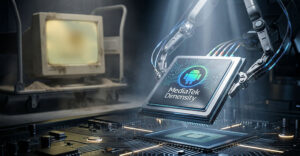
When neural processing units (NPUs) started appearing in Windows laptops, they were billed as a way to enhance inference processing for AI in a way that's energy efficient, explained Brian Jackson, principal research director for the Info-Tech Research Group, a global IT research and advisory company. Their performance is measured in trillions of operations per second (TOPS).
"The idea was that [end users] would want these NPUs to enhance their AI performance," he told TechNewsWorld. "But that just hasn't panned out."
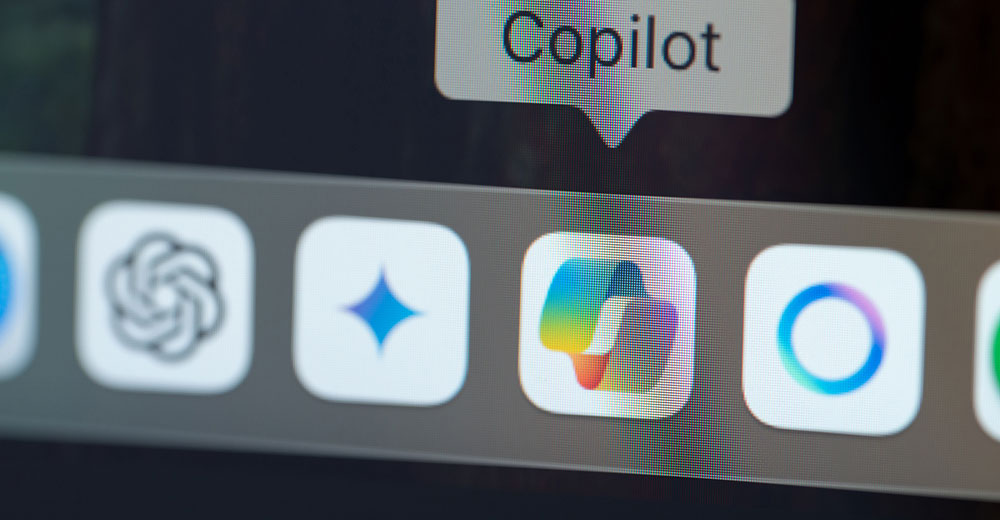
He explained that when the initial NPUs were launched in 2024, they were perceived as immediately underpowered. Microsoft issued a recommendation that at least 40 TOPS was required to support its Copilot features, but the available NPUs offered only 11 TOPS, so consumers felt the new hardware was obsolete as soon as it arrived.
"More recent launches in 2025 did address this with newer NPU components on Intel or Qualcomm processors meeting or exceeding that recommendation, but it didn't get off on the right foot," Jackson said.
There was also no real killer application that required an NPU, he continued. "The chips only improve the energy performance of AI inference," he explained. "Laptops with a GPU or a CPU can handle the inference for AI, they just do it slightly more slowly or at a greater cost to battery life."
Also, the onboard NPU is only beneficial if you are running the inference on your local machine, and a lot of AI inference is taking place in the cloud right now, he added. "When I've seen PC makers demo this, they struggle to show off compelling examples of features that would get people excited," he noted. "For example, one feature is better AI backgrounds on your video for Zoom calls, but people are already using features like this and probably feel like it's good enough."
No Magic, Just Utility
Unfortunately, AI on PCs has been positioned as transformative, but users have not felt a clear before-and-after moment, observed Mark N. Vena, president and principal analyst at SmartTech Research, a technology advisory firm in Las Vegas. "Most AI features feel incremental or invisible compared to the cloud tools people already use," he told TechNewsWorld. "Without a killer local use case, consumers default to price, battery life, and performance."
"When Jeff Clarke talks about unmet promise, he is presumably pointing to the gap between marketing and real value," he added. "AI was sold as personal, proactive, and productivity-changing. In reality, most AI features still feel experimental or redundant. The promise was magic. The delivery has been utility. There's where the gap exists."
Rob Enderle, president and principal analyst at the Enderle Group, an advisory services firm in Bend, Ore., agreed that the dearth of AI-specific applications has affected unit sales. "Microsoft launched with two apps -- Recall and Cocreator," he told TechNewsWorld. "Recall was immediately pulled back due to privacy concerns, and no one really uses Cocreator. Why buy a technology that doesn't seem to do anything?"
He also pointed out that Qualcomm AI PCs, which were the only ones that worked at launch, had significant driver and software compatibility issues. "So you not only weren't getting something useful, you were getting a number of potentially annoying problems," he said.
Underwhelming Promises
AI has not really pushed consumers to buy new PCs because there is no obvious, day-one benefit they can feel, contended Kaveh Vahdat, founder and president of RiseOpp, a marketing agency specializing in chief marketing officer services, in San Francisco.
"People still shop based on things they understand immediately, like battery life, performance, weight, and price," he told TechNewsWorld. "Most AI features on PCs are either subtle, hard to explain, or already available through tools like ChatGPT or Gemini in the browser. That is why the promise feels underwhelming."
"It is not that AI does not work," he said. "It just has not given people a strong reason to replace a device that already does the job."
Vahdat added that cloud AI tools have also changed how people think about AI.
"They taught users to expect AI to live in software and work across devices," he explained. "When the best AI experience follows you from your phone to your browser to your laptop, it becomes much harder for a specific piece of hardware to stand out. In that situation, Copilot feels more like a delivery layer than a must-have hardware feature unless on-device AI is clearly faster, more secure, or meaningfully different from what runs in the cloud."
Enterprise Avoidance
Consumers aren't the only ones who lack interest in AI PCs. Enterprises, too, have been slow to embrace the hardware. "Enterprise buyers are reluctant to jump on the AI PC bus because the ROI remains unclear, and compelling use cases haven't fully materialized. There are also IT-security concerns," explained Greg Sterling, co-founder of Near Media, a market research firm in San Francisco.
"AI PC adoption was likely hurt by overselling abstract 'AI-ready' capabilities, which were too abstract for the enterprise, given myriad competing concerns about security, governance, and software compatibility," he told TechNewsWorld.
"Enterprises are privacy-savvy and understand the significant risks inherent to AI services, including but not limited to privacy issues and the risk of hallucinations," added Kirk Sigmon, an intellectual property lawyer with Banner Witcoff in Washington, D.C.
"That remains the case whether or not the AI services are provided locally -- as part of an AI PC -- or remotely -- as part of some website or app," he told TechNewsWorld.
Sigmon added that if an organization is buying new hardware, whether it's useful for AI is a lower priority relative to other concerns, such as price, compatibility with existing enterprise architecture, and ease of servicing.
"One day, all PCs will be AI PCs, just as all laptops became thin and light laptops or ultrabooks," predicted Ross Rubin, the principal analyst at Reticle Research, a consumer technology advisory firm in New York City.
"AI PC is just one of these transitional labels that serves a purpose today to build awareness that increasingly your PC will be able to do more on your behalf, understand you better," he told TechNewsWorld. "Eventually, we'll take the AI in a PC for granted."
Meanwhile, the road ahead for AI PCs may still be rocky. "With ongoing component shortages expected to drive up the cost of PCs throughout 2026, I don't see demand for AI PCs improving," said Kristen Hanich, director of research at Parks Associates, a market research and consulting company specializing in consumer technology products, in Dallas.
"Consumers are likely to hold onto their existing machines for longer and remain on Windows 10, buy less expensive replacements if they do decide to move to Windows 11, or move to operating systems that have lower hardware requirements and less or no integrated AI," she told TechNewsWorld.